Blossom Dental and Facial Aesthetics
Same-day emergency appointmentsDental emergency? (386) 947-7603
900 W. Granada Blvd., Unit 5, Ormond Beach, FL

Preventive dentistry
Dental exams and cleanings
Healthy smiles start here
Regular exams and cleanings help catch problems early, before they get worse. Here's what to expect at your visit to Blossom Dental.
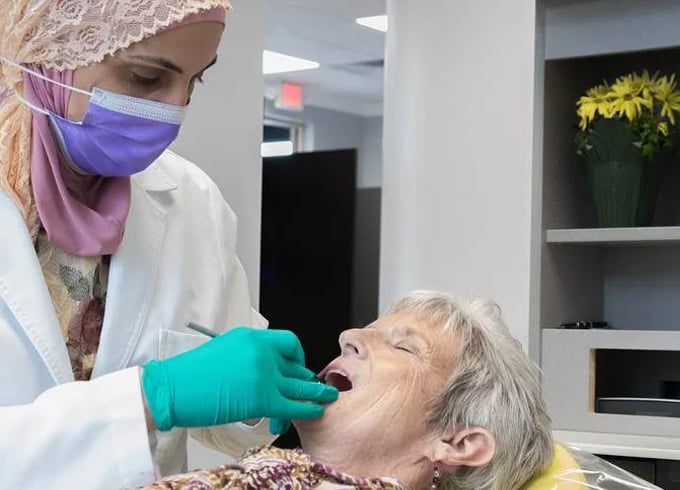
Every six months
Recommended cleanings
Overview
Prevention comes first
At Blossom Dental, we believe great dental care is proactive. Regular exams and cleanings help us spot potential problems early, before they get worse, and keep your teeth free of harmful debris and bacteria.
Your first visit establishes your oral health baseline. It's a chance for Dr. Huda Aljonaidy to get to know you, your dental history and anything that's bothering you right now.
Why regular visits matter
Catch problems early
A thorough exam helps find potential problems before they get worse and become harder to treat.
A cleaner, brighter smile
A professional cleaning removes hardened plaque that brushing can miss, and polishing lifts surface stains.
Healthier gums
Gum disease is rarely painful in its early stages. Regular checkups help find it while it's still reversible.
More than your teeth
Your exam includes an oral cancer screening and checks of your bite and jaw joints.
Know the signs
Signs of gum disease to watch for
Gum disease is rarely painful, but it usually causes some changes you can notice. Book a visit if you have:
- Sensitive teeth
- Receding gums that make your teeth look longer
- Bad breath
- Gums that bleed or feel sore
- A change in how your teeth line up
What to expect
What happens at your visit
01
Getting to know you
We start by reviewing your medical and dental history and talking through any concerns. We also assess your risk for gum disease, looking at health conditions, medications and habits like smoking or grinding your teeth from stress.
02
A comprehensive exam
Dr. Huda checks your teeth, tongue, lips, gums and the surrounding areas of your mouth, head and neck. Your exam includes diagnostic X-rays, a digital 3D scan of your mouth, an oral cancer screening, a gum evaluation and checks for clenching, grinding and jaw joint (TMJ) function.
03
Your cleaning
Your dental hygienist removes plaque and tartar using hand scalers, an ultrasonic scaler or both. Cleanings are usually simple and pain-free, and numbing gel or local anesthetic is available if your teeth are sensitive.
04
Polish, floss and home care tips
Your teeth are polished to remove stains and flossed for a fresh, clean feel. Before you leave, you'll get tips for caring for your smile at home.
Gum health
The stages of gum disease
Stage 1
Gingivitis
Gingivitis is the first and mildest stage. Your gums may look red and swollen and bleed easily, often because of gaps in daily oral hygiene. The good news is that it's reversible with professional treatment and good home care.
Stage 2
Periodontitis
Untreated gingivitis can progress to periodontitis. Plaque spreads below the gumline, and the toxins it produces trigger chronic inflammation that breaks down the gum tissue and bone that support your teeth. Your gums pull away from your teeth and form infected pockets that deepen over time.
Stage 3
Advanced periodontitis
In advanced periodontitis, the pockets deepen further and may fill with pus, the gums can swell and bone loss continues. Teeth may become sensitive to heat and cold, hurt when you brush and grow loose. In some cases, a tooth may need to be removed to stop the disease from spreading.
Cleanings
Types of dental cleanings
Routine cleaning (prophylaxis)
Routine cleaning (prophylaxis) is preventive care for a generally healthy mouth. It removes hardened plaque that brushing has missed. If you brush twice a day and floss, it may be all you need, and we recommend it every six months.
Scaling and root planing
Scaling and root planing is a deeper, therapeutic cleaning that helps stop the spread of infection and bone loss. It removes tartar (calculus) from below the gumline and smooths the root surfaces. Your gums are numbed first, and treatment may take more than one visit.
Arestin (minocycline)
Arestin (minocycline) is a slow-release antibiotic placed in gum pockets deeper than 5 mm after scaling and root planing. It keeps the medicine working right where the infection is, without exposing the rest of your body, and dissolves on its own after 30 days. Avoid flossing or using toothpicks at the treated site for at least 10 days.
Periodontal maintenance
Periodontal maintenance is a follow-up cleaning that keeps your gums healthy after gum disease treatment. It's more detailed than a routine cleaning and may be scheduled every three to four months.
Questions
Questions about exams and cleanings
Still wondering about something? Call us at (386) 947-7603 or send us a message, and we'll be glad to help.
How often should I have an exam and cleaning?
For most people with a healthy mouth, we recommend a routine cleaning every six months, along with brushing and flossing at home. If you've been treated for gum disease, periodontal maintenance visits every three to four months help keep your gums healthy.
Do dental cleanings hurt?
Most cleanings are simple and pain-free. If you have sensitive teeth or another condition that makes cleanings uncomfortable, we can use numbing gel or local anesthetic. Deeper cleanings, like scaling and root planing, are done with numbing.
Will my insurance cover exams and cleanings?
Coverage depends on your plan. We'll go over costs, insurance and payment options at your visit, so you know what to expect.
What's the difference between a regular cleaning and a deep cleaning?
A regular cleaning, or prophylaxis, is preventive care for a healthy mouth. A deep cleaning, called scaling and root planing, treats gum disease by cleaning below the gumline and smoothing the root surfaces. It's done with numbing and may take more than one visit.
What's the best way to brush my teeth?
Brush twice a day for at least two minutes with a soft-bristled brush, ideally an electric one. Hold it at a 45-degree angle to your gums and use gentle, short strokes, including on the inner surfaces of your teeth. Floss every day and brush your tongue for fresher breath.
What should I expect at my first visit?
We'll review your medical and dental history, talk about any concerns and complete a comprehensive exam with X-rays and a digital 3D scan. This sets your oral health baseline, so we can plan the care that's right for you. To book, just contact our office.
Keep exploring