Blossom Dental and Facial Aesthetics
Same-day emergency appointmentsDental emergency? (386) 947-7603
900 W. Granada Blvd., Unit 5, Ormond Beach, FL

Home/Dental care/Dental surgery
Oral and gum surgery
Dental and gum surgery
Comfort comes first.
From gentle extractions to wisdom teeth, bone grafting and gum surgery, Dr. Huda provides surgical care in Ormond Beach with your comfort in mind.
Comfort dentistry
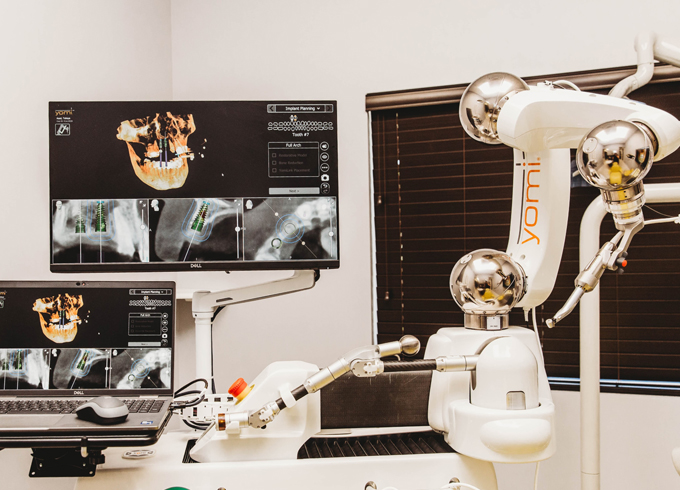
3D imaging
Planning for your future smile
Overview
Surgical care with your comfort in mind
Sometimes the healthiest choice for your mouth is a surgical one. Whether a tooth can't be saved, a wisdom tooth is causing trouble or your gums need repair, Dr. Huda Aljonaidy offers dental and periodontal (gum) surgery right here in our Ormond Beach office.
If a tooth can't be restored because of trauma, decay, gum disease or a severe crack, removing it can protect your health. Taking out an infected tooth is the most effective way to stop the infection, and removing a tooth that's failing from advanced gum disease gives the teeth next to it a healthier environment.
Benefits
Thoughtful surgical care
01
Comfort dentistry
Dr. Huda has extensive experience with gentle extractions, and nitrous oxide is available to help you relax.
02
3D imaging
A 3D X-ray helps make wisdom tooth removal safer and more accurate.
03
Planning for your future smile
A bone graft placed on the day of an extraction helps preserve bone for a future replacement tooth.
04
Healing support with PRF
Platelet Rich Fibrin, made from a small sample of your own blood, can be used in many procedures to support healing.
Is it right for you?
When dental surgery may be recommended
When a tooth can be saved, that's usually the first choice. Surgery may be recommended if you have:
- A tooth that can't be restored after trauma, decay or a severe crack or break
- An infected tooth that needs to be removed to stop the infection
- A tooth affected by advanced gum disease (periodontitis)
- Wisdom teeth that are impacted, misaligned or only partly through the gum
- Pain, swelling or jaw stiffness around a wisdom tooth
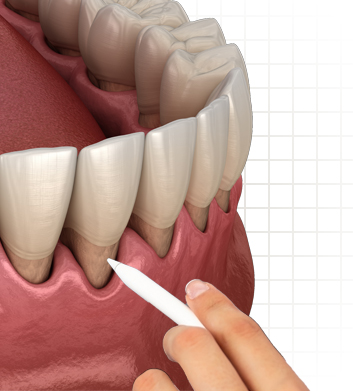
- Receding gums that leave the roots of your teeth exposed
What to expect
What to expect
01
Exam and imaging
Dr. Huda examines the area and reviews your X-rays. For wisdom teeth, a 3D X-ray helps her plan a safe, accurate extraction.
02
Comfort first
The area is numbed before treatment begins, and nitrous oxide is available if you'd like help relaxing.
03
Your procedure
Dr. Huda performs your procedure. If a tooth is removed and you plan to replace it, a bone graft is ideally placed the same day to preserve the site.
04
Healing at home
You'll receive wound care instructions covering the first six weeks after surgery. Call us if you have any questions as you heal.
Wisdom teeth
Wisdom teeth that come in straight with healthy gums don't always need to come out. When they're misaligned, they can crowd or damage nearby teeth, the jawbone or nerves. They can also become impacted or only partly break through the gum.
A partly erupted wisdom tooth leaves an opening where bacteria can get in, which can lead to infection, pain, swelling, jaw stiffness and feeling generally unwell. These teeth are also hard to reach with a toothbrush and floss, so they're more prone to decay and gum disease. When removal is the right choice, Dr. Huda can perform most wisdom tooth extractions in our office, guided by 3D X-ray imaging.
Bone grafting and socket preservation
After a tooth is removed, the bone around the empty socket can shrink over time. A bone graft placed right after the extraction helps preserve enough bone to replace the tooth later, for example with a dental implant.
The graft material is granular, with a texture a bit like sand. It's held in the socket with a collagen pellet and dissolvable stitches. We recommend grafting on the day of the extraction, because it makes the later steps of replacing your tooth simpler.
FAQ
Questions about Dental surgery
Still wondering about something? Call us at (386) 947-7603 or send us a message, and we'll be glad to help.
Will a tooth extraction hurt?
The area is numbed before treatment, and Dr. Huda has extensive experience making extractions as comfortable as possible. If you feel anxious, nitrous oxide can help you relax. Some soreness as you heal is normal, and we'll explain how to manage it.
Do my wisdom teeth need to come out?
Not always. Wisdom teeth that come in straight with healthy gums don't have to be removed. Removal is usually recommended when they're impacted, misaligned or only partly through the gum, because they can cause infection, pain and swelling or damage nearby teeth. A 3D X-ray helps Dr. Huda decide what's best for you.
What is recovery like?
Healing depends on the procedure you have. You'll receive wound care instructions covering the first six weeks after surgery, and following them closely helps you heal well. Where it helps, PRF made from your own blood may be used to support healing.
Why would I need a bone graft after an extraction?
When a tooth is removed, the bone in that area can shrink. A graft placed the same day helps preserve enough bone to replace the tooth later, for example with an implant, and makes those later steps simpler.
Can you treat receding gums?
Yes. Gum recession can be caused by gum disease, natural aging or brushing too hard, and it leaves tooth roots exposed and more vulnerable to decay. Dr. Huda treats it with the Chao Pinhole® Surgical Technique, a minimally invasive approach with no incisions or sutures.
How much does dental surgery cost?
The cost depends on the procedure and what your mouth needs. We'll go over costs, insurance and payment options with you at your visit, before any treatment begins. To get started, book an exam with Dr. Huda.
Keep exploring